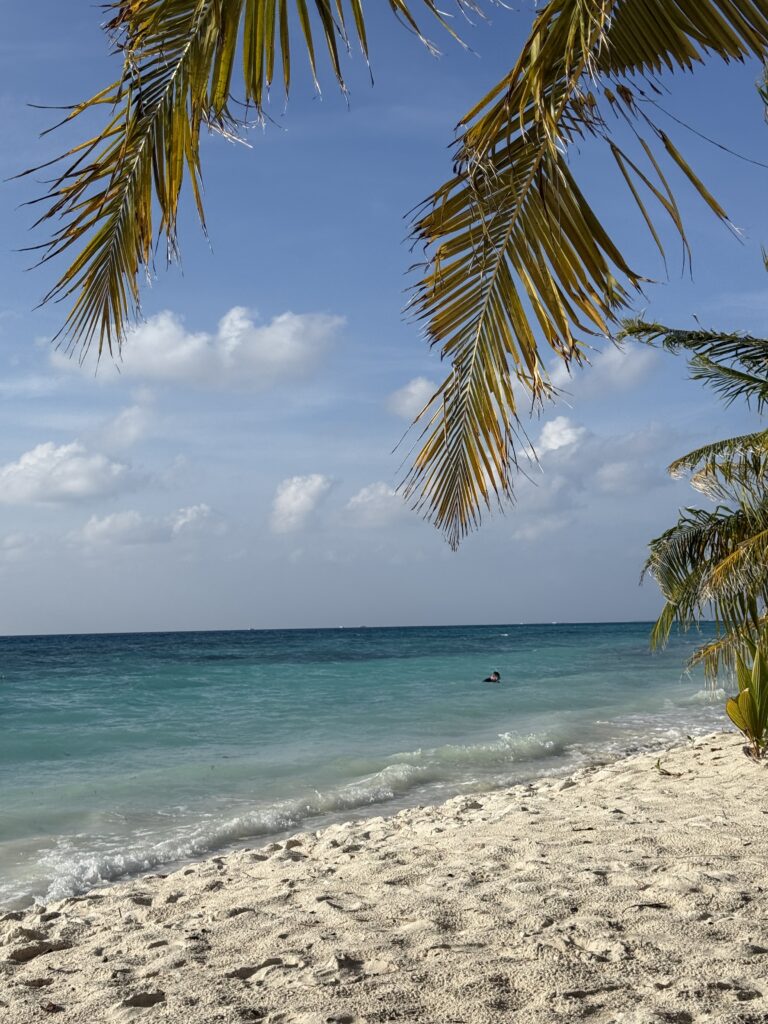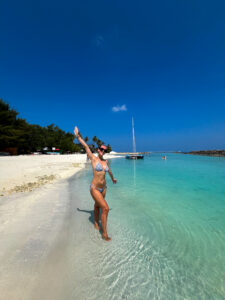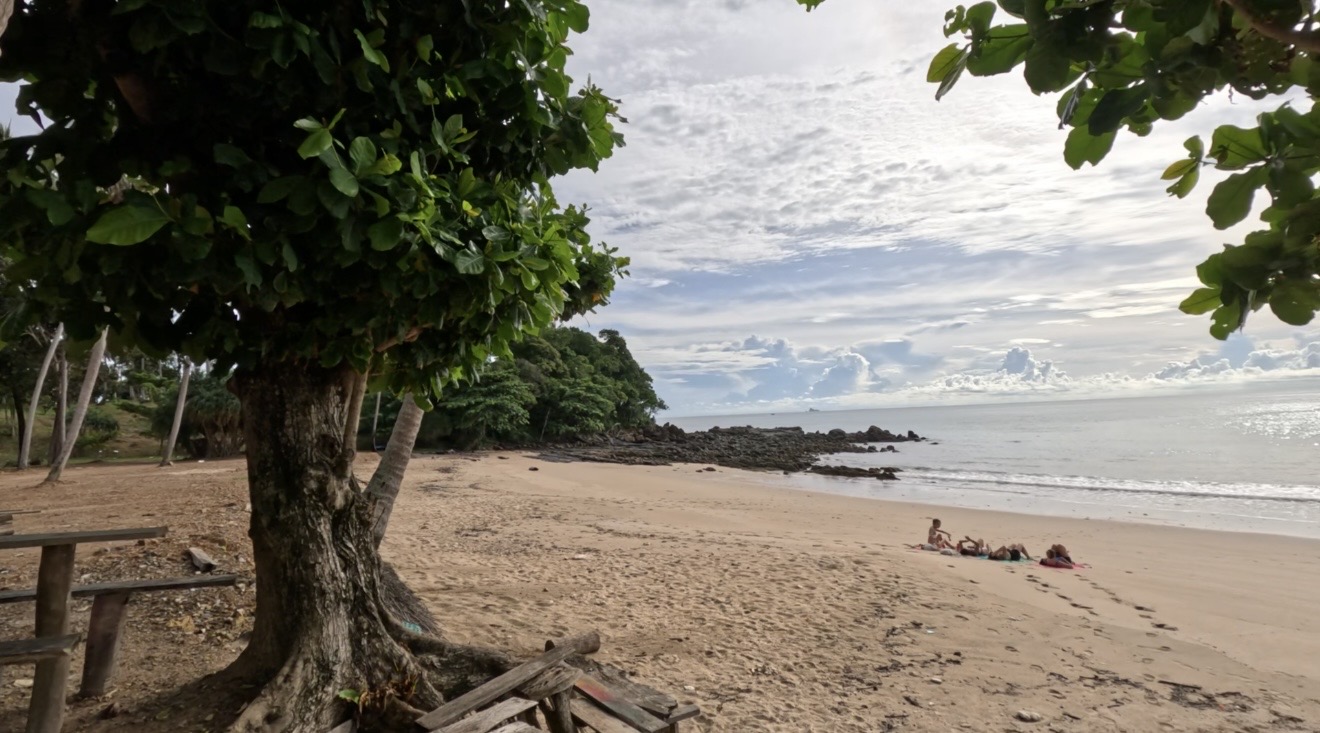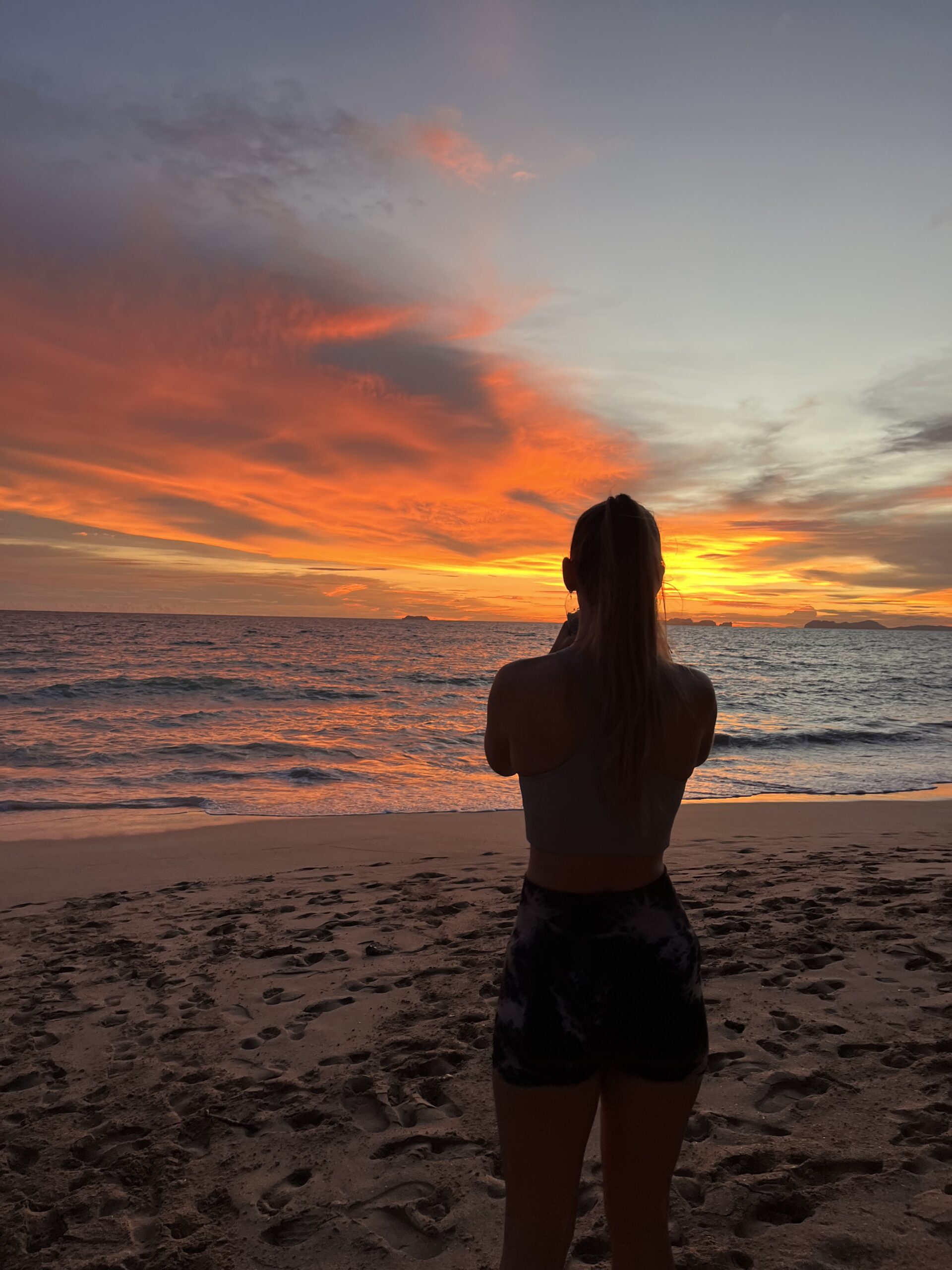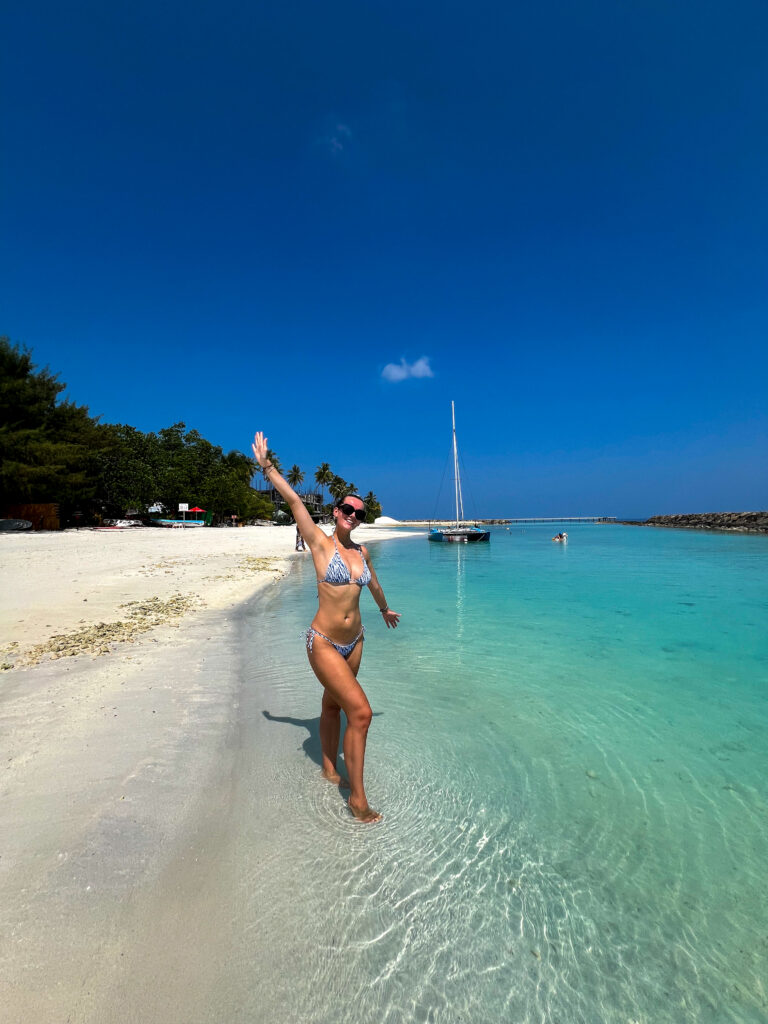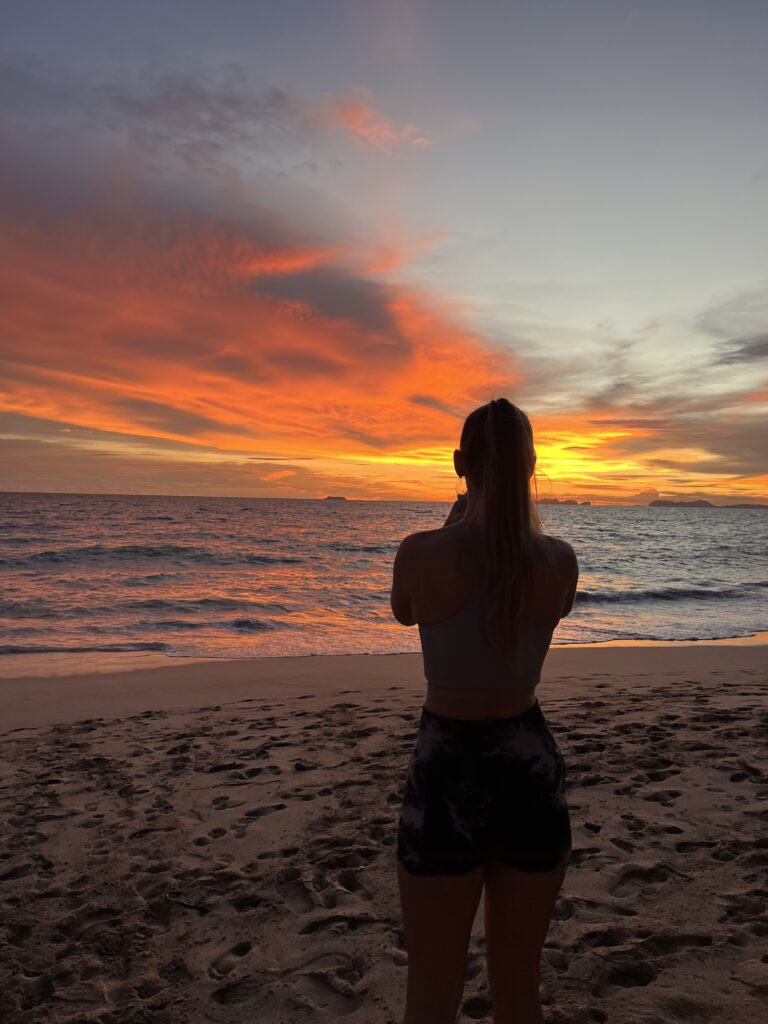
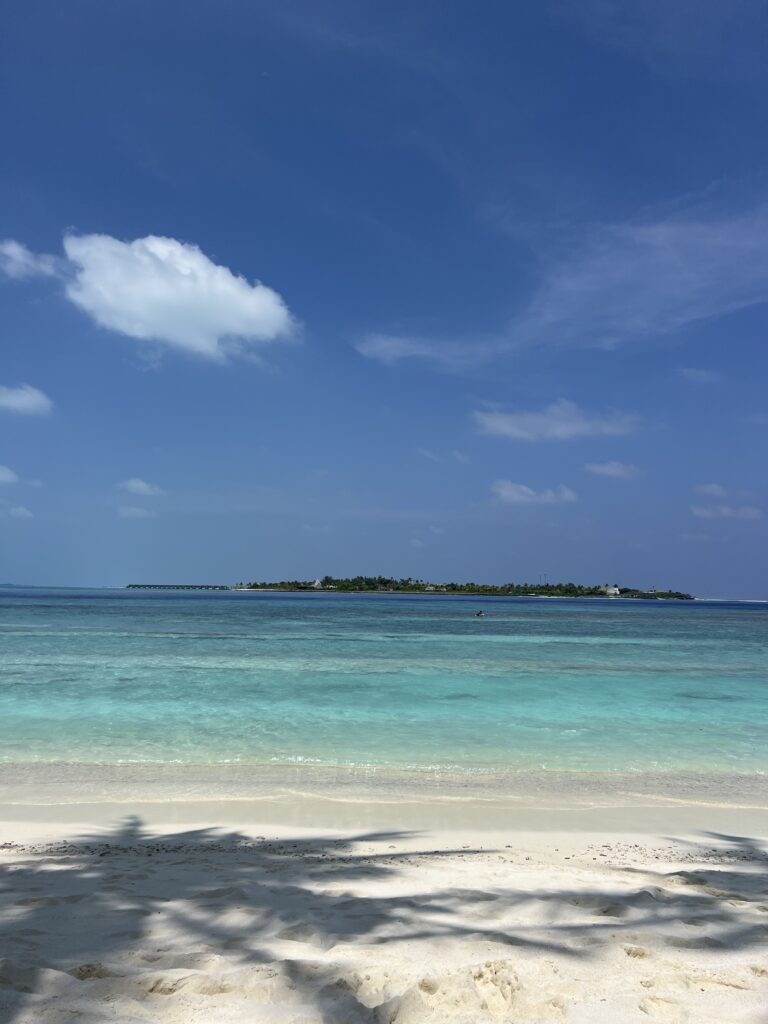
The most iconic dream destination I’ve visited so far: the bluest waters, the whitest beaches with the softest sand, swaying palm trees, colorful coral gardens, and some of the most beautiful underwater life in the world. The Maldives is literally everything I imagined and exactly what paradise looks like!
The local islands of the Maldives are absolutely beautiful and, in my opinion, one of the best ways to experience the Maldives in a more affordable and authentic way. I prepared myself as much as I could before my first trip, but the Maldives still taught me a few things along the way.
Before you book your flight and start dreaming about sipping coconuts on the soft sandy beach, there are a few important things you should know about visiting the local islands of the Maldives.
From someone who has been here already three times, these 9 things will help you feel prepared before visiting. So, after reading this post, you know what you can expect and what to keep in mind. This way, you can make the most of your time in the Maldives. 🙂
Things You Need to Know Before Visiting the Maldives
The best time to visit the Maldives
In general, I would say the best time to visit the local islands of the Maldives is from January to April. You’ll have the best chance of sunny weather, the water is calmer and it’s perfect for beach days. This is obviously also the most expensive period to visit, so I would really recommend booking your accommodation(s) in advance.

Dry Season: January to March
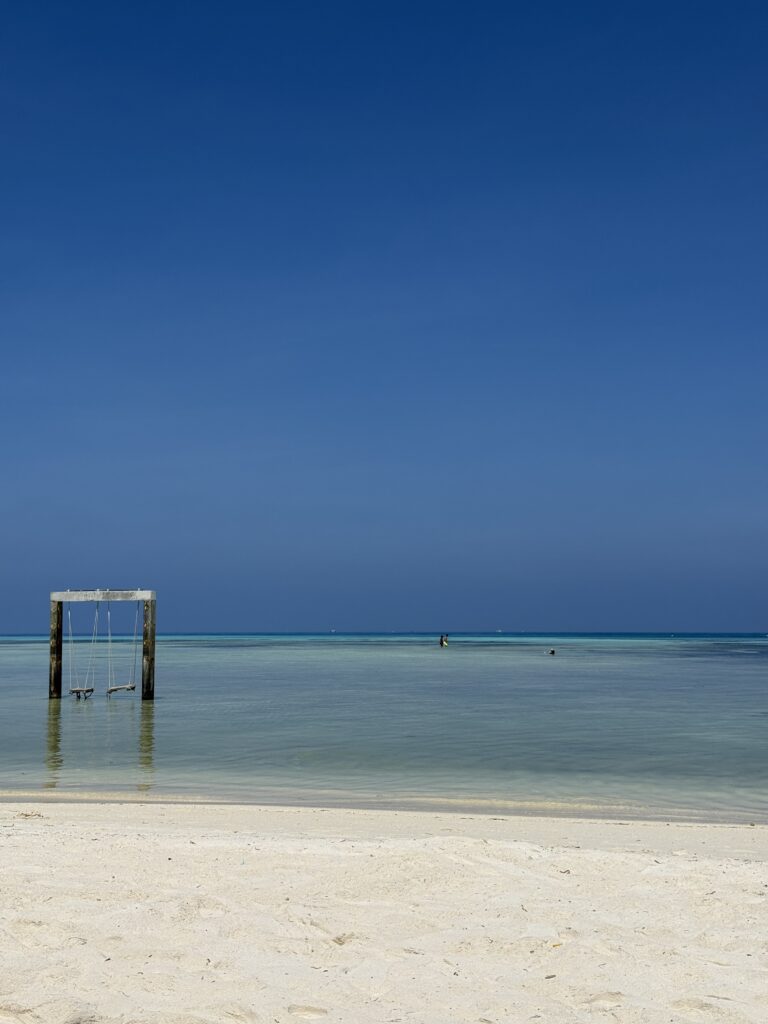
The months January to March are called the dry season. This is one of the best times to visit the Maldives and I can see why. You have the highest chance of sunny days, stable temperatures and the sea is calm, so perfect for water activities. This period is also the most expensive one: prices for hotels and guesthouses are higher, but also flight prices will increase during this period. From my point of view, it’s definitely worth visiting in one of these months if this is your first time visiting the Maldives. In these months you can expect high temperatures around 30 degrees, lots of sunshine and it’s the best for activities such as snorkeling with turtles, a dolphin tour or diving.
Wet Season: May to November
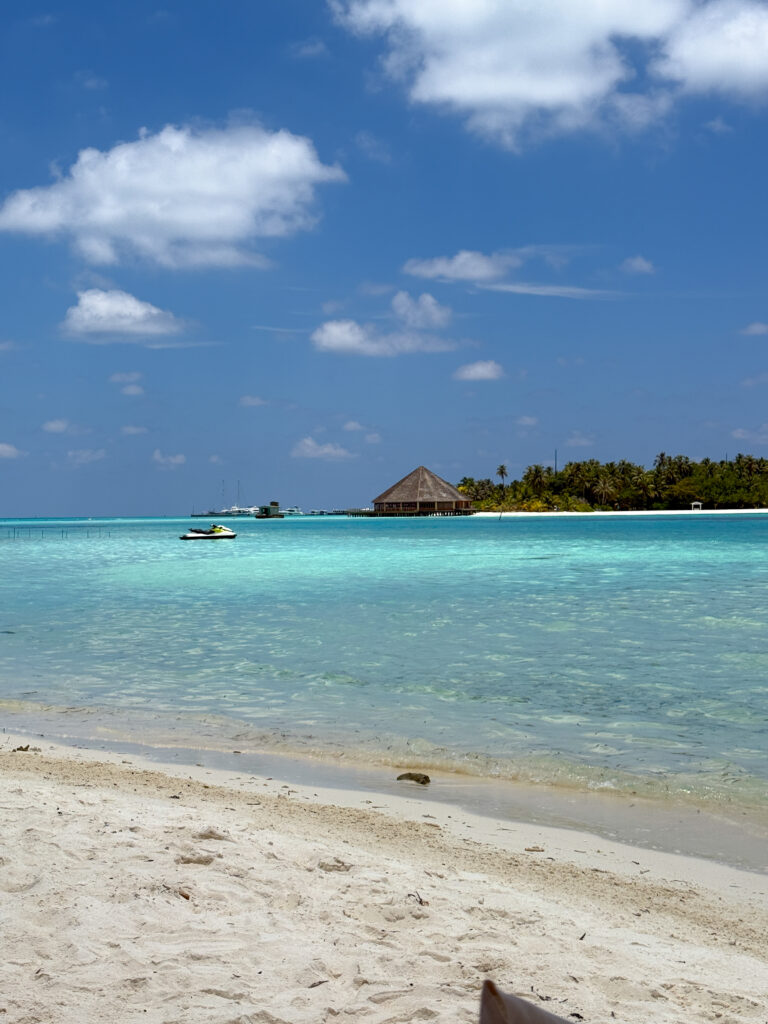
Usually, the wet season runs from May to November, during the southwest monsoon. In these months you’ll have a higher chance of rain, the sea is rougher, which really is no fun if you’re on your way to another island. It certainly doesn’t mean it will rain all day. Last year, I visited the Maldives in November, and we actually had pretty good weather. Well, we had some tropical showers during the day, but overall, it was sunny and the humidity was high. Temperatures were like 26 to 30 degrees.

Fill in the Maldives Arrival Card before you arrive
Everyone who’s visiting the Maldives needs to fill in the Maldives Arrival Card. You can do this within 96 hours before your flight. In the form, you must fill in details like passport information, flight details, where you are staying in the Maldives, and some basic travel information. I would definitely recommend doing this before you arrive, so you don’t have to arrange it last-minute at the airport. After submitting the form, you will receive a confirmation, which you may need to show when you arrive at immigration. Good to know: only use the official IMUGA website, because the form is completely free and should never cost you money.
Respect the culture and respect their rules
The Maldives is a Muslim country, and when visiting the local islands, it’s important to respect the rules and customs of the locals. This is also one of the biggest differences between staying on the local islands and the resort islands.
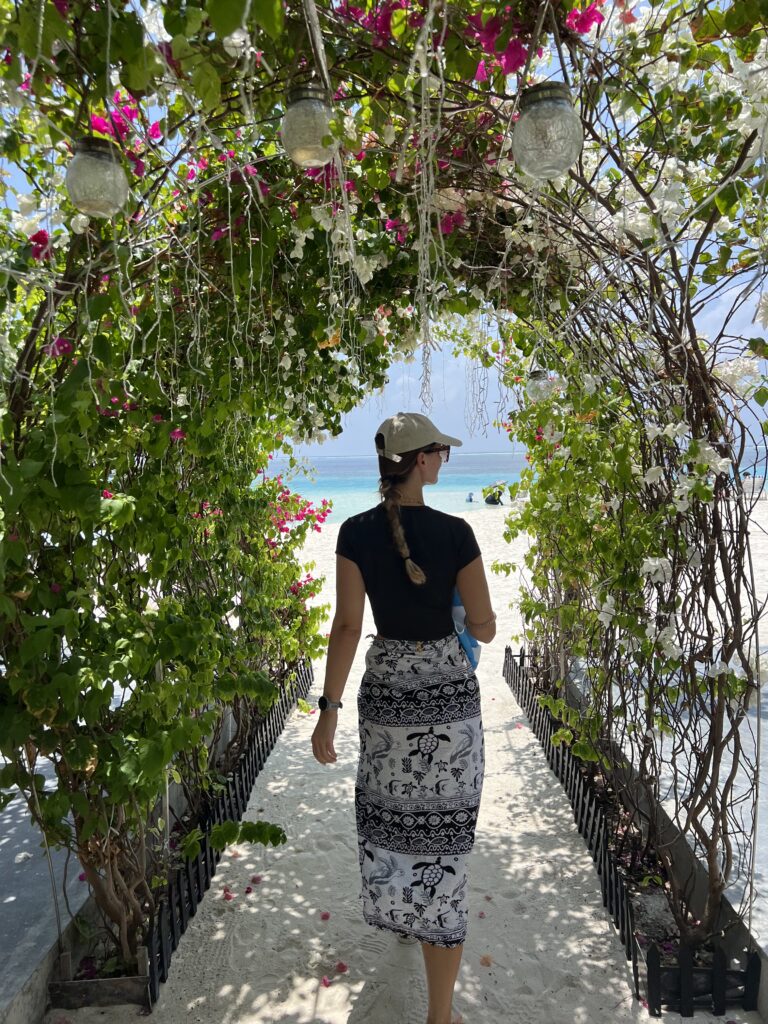
When walking on a local island, you must cover your shoulders and knees as a woman to dress properly. As a man, it’s disrespectful to walk around without a shirt on. Swimwear is only allowed on the so-called bikini beaches, which are made for tourists.
Another thing which is good to know if you love to drink a beer or a glass of wine during your holiday: alcohol is not allowed on the local islands of the Maldives.
In my opinion, learning about the local culture is part of the experience, and once you know what to expect, it is very easy to adapt.
Boat transfers and local ferries
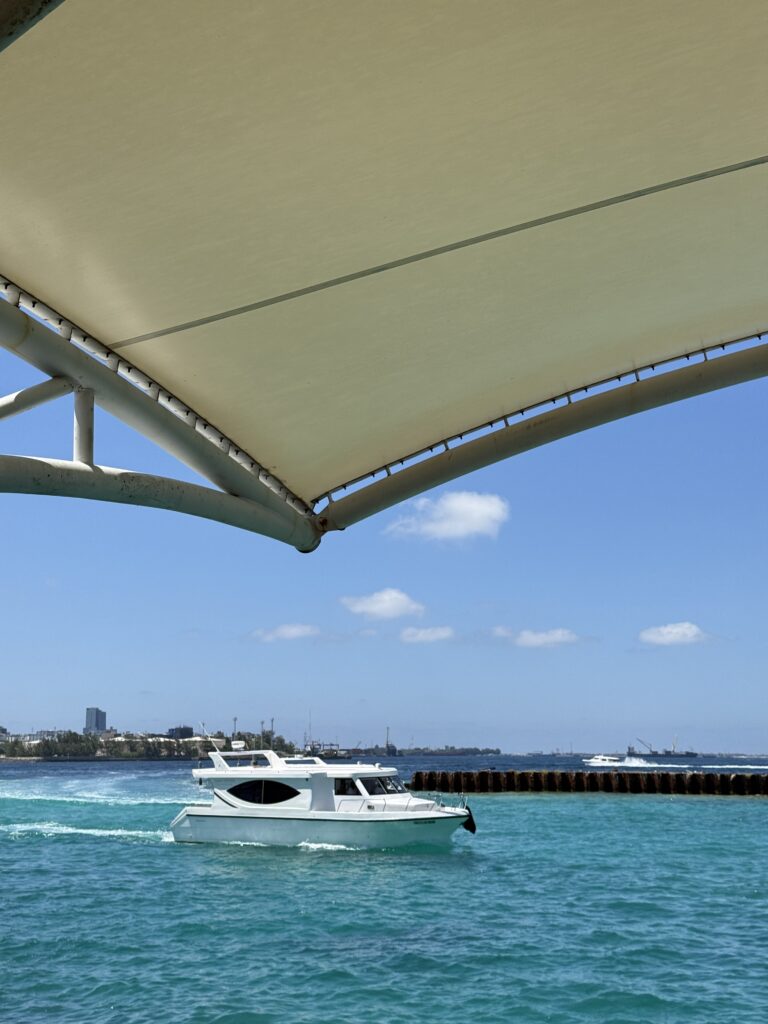
In the Maldives, you usually have 3 options to travel from Malé to one of the islands. By shared speedboat, with the local ferry or by seaplane. The last one is the most expensive one and mostly used to go to resort islands, so in this post I’ll leave this one out of it.
Shared speedboats are the fastest way and easiest option to travel to another island. Usually, your guesthouse or hotel can arrange them for you. They will tell you exactly what times you can choose from and which counter you have to go to before departure. The downside is that the shared speedboats are more expensive, prices range from $25 to $80 one-way, per person.
The local ferry is another experience you cannot miss if you want to have a real idea of what traveling in the Maldives looks like. The most important thing here: local ferries don’t run on a Friday. So, if you want to go by local ferry, make sure you plan your trip carefully. Prices for the local ferries range from 15 MVR to 150 MVR one-way. (This is around $1 to $10 one-way, per person) For more information, check my how to travel to the Maldives blog.
Local currency, cash and ATMs
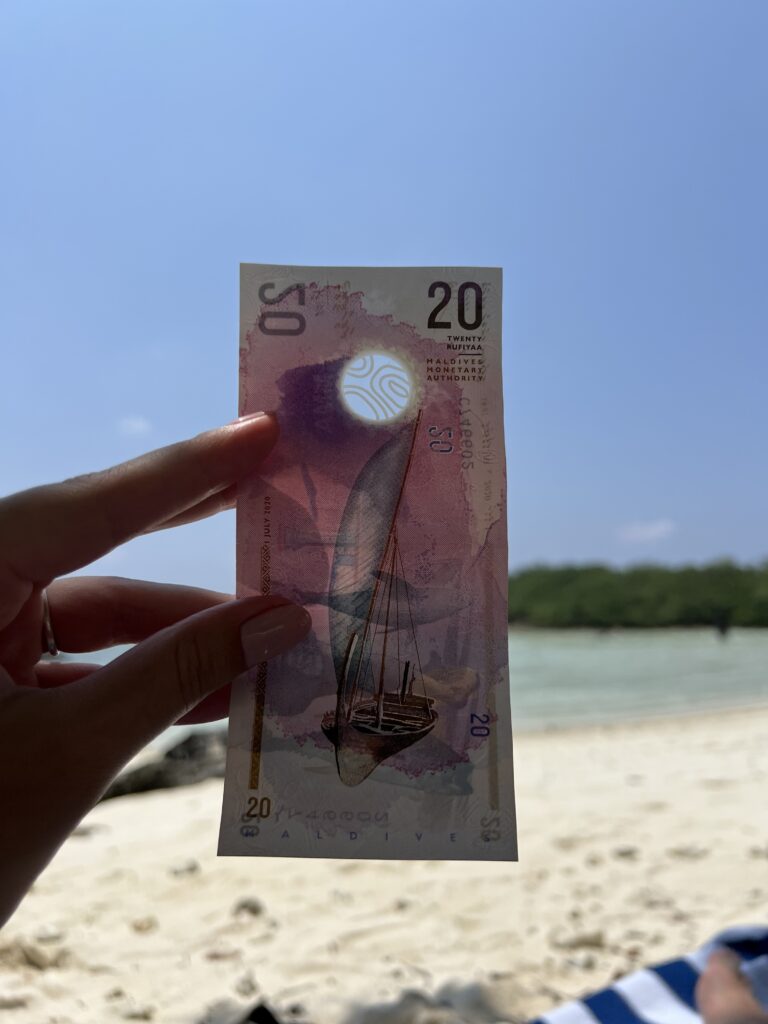
The local currency in the Maldives is the Maldivian Rufiyaa. Cash is still used a lot on the local islands. Depending on the island, some restaurants, cafés, excursions or transport transfers only accept cash. Besides the local currency, dollars are used a lot in the Maldives. I even noticed some of the restaurants I’ve visited only show their prices in dollars. Paying by card is possible in some places, but definitely not everywhere, so I would not rely on your card only. Also important to know: not every local island has an ATM, and even if there is one, it’s not guaranteed that it works or has enough cash. Keep this in mind especially during Ramadan, cause ATMs won’t be restocked that often that month.
I would always advice taking some cash at Malé Airport, just to be 100% sure you have at least some cash with you. But before arriving, check if the local island you’re visiting has an ATM.
Skip staying in Malé City if you can
If you ask me, I would not stay in Malé City, unless I really have to. It can be interesting to see the capital for a couple of hours, but I personally would not choose it as a place to spend the night before or after visiting the local islands.
Malé City is very busy and crowded, it’s less than 6 square kilometers and has an estimated population of 260 thousand people. During our visit, we also heard from locals that there has been an increase in criminality, which doesn’t sound like a comfortable place to stay.
Another reason why I would skip Malé City is that the accommodations are quite expensive for what you get in return. Compared to other places in the Maldives, I don’t think the value for money is worth it.
Instead, I would recommend staying at Hulhumalé if you need to stay close to the airport for one night. It seems more relaxed and perfect for a short stayover. I’ve never been there myself but heard nothing than good things about this place.
Get a local SIM card
You can buy a local SIM card at the airport when you arrive in the Maldives, which sounds very easy at first. During my first time in the Maldives, I bought one myself at a local store at the airport. Unfortunately, the connection was not that great on every local island, so it is not always as reliable as I expected at first.
Personally, I would recommend using an eSIM for the Maldives instead. It is easy to install before your trip, you do not have to stand in line at the airport, and you can connect as soon as you land.
There are several eSIM companies you can choose from, but I always use Airalo myself. It has worked well for me on many trips, and I just find it one of the easiest options when traveling. With my code INGRID5880, you can also get €3 off your first purchase.
One thing to know is that SIM cards and data packages in the Maldives can be quite expensive compared to other Asian countries. So, if you do not really care about having internet everywhere, you can also just rely on Wi-Fi at your guesthouse, hotel, and some restaurants.
Book your accommodation in advance
If you are visiting the Maldives during the high season, especially from January to April, I would highly recommend booking your accommodation in advance. This is one of the most popular periods to visit, because the weather is (usually) at its best, so it can get quite busy.
The earlier you book, the more choice you have and also for a better price. You can still compare different guesthouses, small hotels, locations, reviews, and prices instead of ending up with a couple of overpriced accommodations.
Plan your route across the islands
If you want to visit more than one local island in the Maldives, it is important to plan your route in advance. The Maldives may look like a collection of tiny islands close to each other, but traveling between them is not always as simple or quick as it looks on the map.
Especially if you are traveling on a budget, you should check the local ferry schedules before booking your accommodations. Some ferry routes only operate on certain days or at specific times. If you plan your itinerary around the ferries, you can save a lot of money on transport.
Also keep in mind that traveling from one island to another can take quite a while. If your next island is in a different atoll, it might take almost an entire day to get there. Sometimes you need to travel back towards Malé City first, before continuing to another island, which can make the journey quite a bit longer than expected.
If you have a slightly bigger budget, shared speedboats are usually the easier and faster option. But even then, I would not leave it until the last minute. Speedboats can get fully booked closer to the date, especially in high season, so it is smart to arrange your transfers with your guesthouse or hotel in advance.